Gourmet
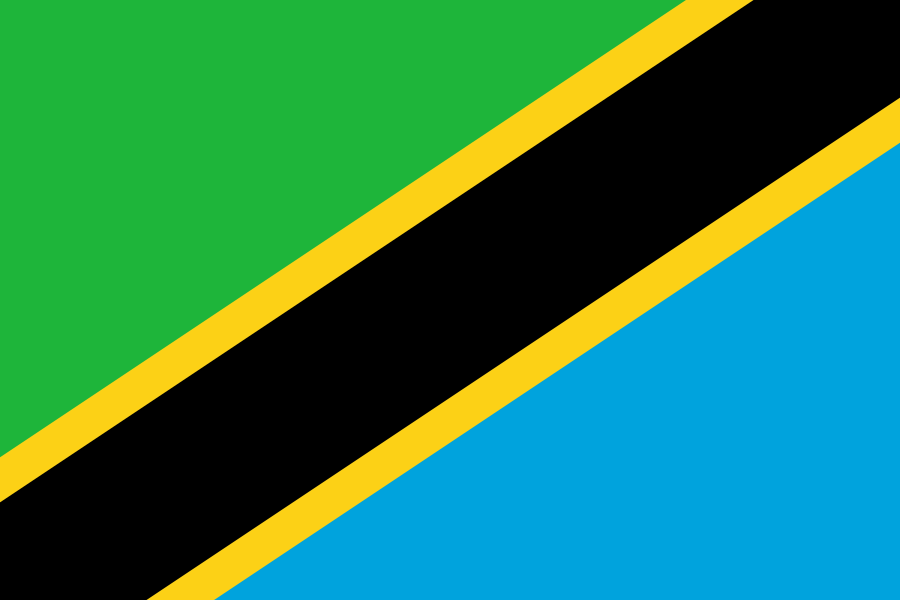
Tanzania
Tanzania began coffee cultivation in 1898. Today Tanzania is the 3rd largest coffee producer in Africa and 15th in the world. Supporting an estimated 400,000 families directly as well as an estimated 2.4 million indirectly, the Tanzanian coffee industry is composed of 90% small and medium farms and covers 265,000 hectares of the country's land. With Arabica making up 70% of the country's yield and Robusta the balance, Tanzanian coffee grows in a diverse altitude of 1400-1800 meters above sea level and is dispersed in a number of distinct regions: Mbinga, Tarime, Oldeani, Arusha, Mount Kilimanjaro and Morogoro. The characteristics of a Tanzanian coffee usually include: a medium body, bright and winey acidity, sweet fruity flavors and floral notes.
Growing Tanzania
Reference notes on the crop itself. Lot-level detail is confirmed with the desk coffee by coffee.
- Harvest
- Southern Highlands May to September; northern regions July to November
- Altitude
- Southern Highlands roughly 1,200 to 1,800 m. No single national figure could be sourced.
- Varietals
- Bourbon, Kent, Arusha and Blue Mountain (a Typica lineage)
- Processing
- Almost all washed; small volumes of natural
- Growing regions
- Kilimanjaro, Arusha and Karatu/Ngorongoro in the north; Mbeya, Mbozi, Songwe and Ruvuma/Mbinga in the south; Kigoma in the west; Kagera for robusta