Gourmet
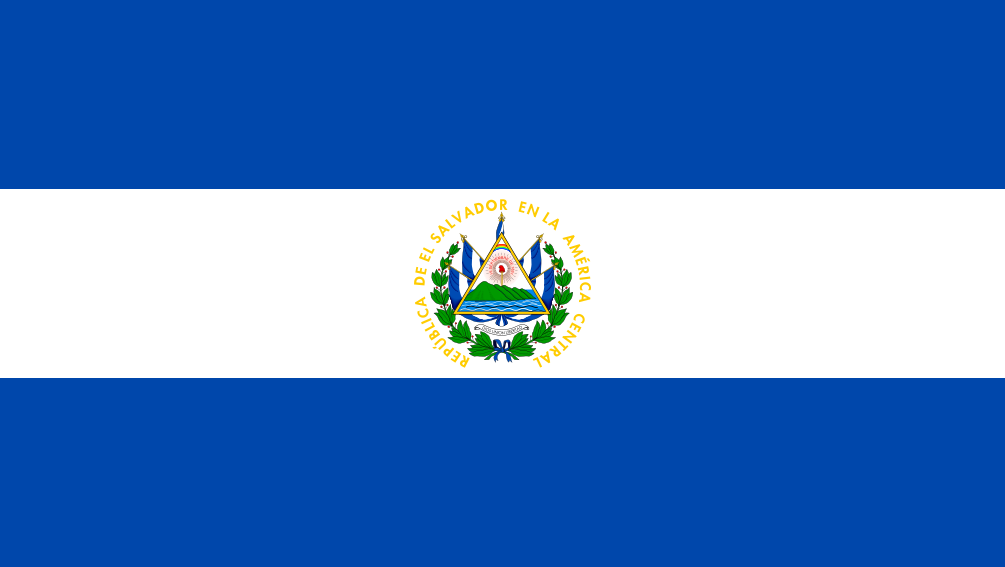
El Salvador
El Salvador first began producing coffee in the 19th century and today this unique coffee bean ranks as 11th in worldwide coffee production. An important national product, coffee growing employs close to 135,000 people directly and involves almost 20,000 coffee producers, 65% of whom are small and medium farms of under 120 hectares. Occupying almost 12% of the country, coffee growing plantations are found within an altitude range of 500-1800 meters above sea level, largely within the western and central provinces of Santa Ana, Ahuachapán, Sonsonate and La Libertad. There are also plantations in the eastern part of the country, which are mostly located in San Miguel and Usulutan.
Growing El Salvador
Reference notes on the crop itself. Lot-level detail is confirmed with the desk coffee by coffee.
- Harvest
- October to March
- Altitude
- Graded by altitude rather than a single published range: Strictly High Grown above 1,200 m, High Grown 900 to 1,200 m, Central Standard 500 to 900 m
- Varietals
- Bourbon, Pacas, Pacamara, Caturra and Catuaí, with rust-resistant Cuscatleco, Marsellesa, Sarchimor and Anacafé 14 in newer plantings. Pacas and Pacamara were both bred in El Salvador.
- Processing
- Predominantly washed, with some natural and honey
- Growing regions
- Alotepec-Metapán, Apaneca-Ilamatepec, Cacahuatique, Chichontepec, El Bálsamo-Quezaltepec and Tecapa-Chinameca