Gourmet
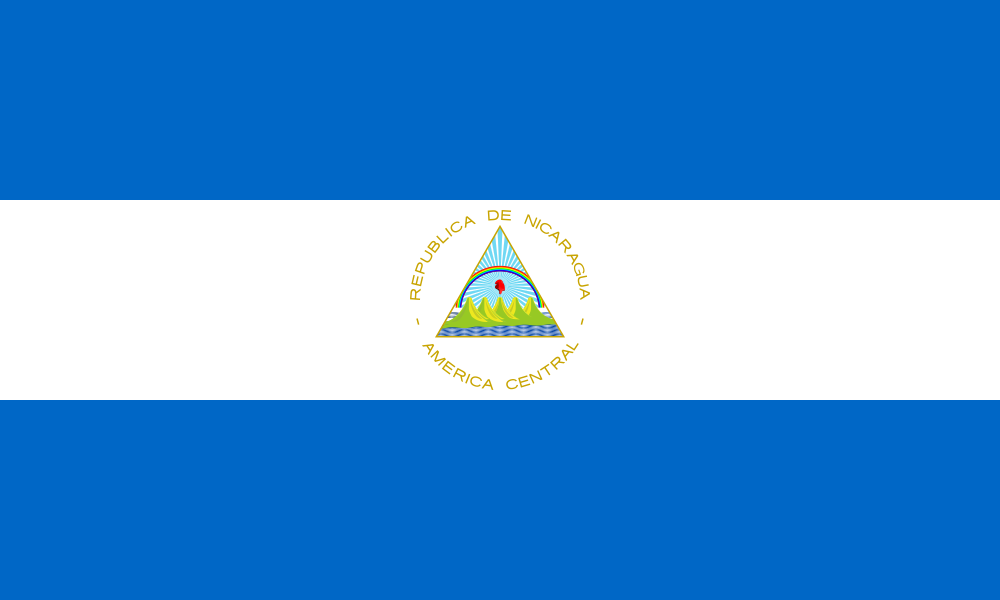
Nicaragua
Nicaragua's history with coffee began in the mid 19th century. Today coffee supports more than 40,000 families, in this country with 95% of the farmers being small scale. Coffee growth taking place on 108,000 hectares on land is distributed in the following regions: North Central, Northeast and South Pacific. Nicaragua has an altitude range of 800-1500 meters above sea level and has a number of diverse coffee growing areas, including North Central, Northeast and South Pacific. With 95% of Nicaraguan coffee being grown under shade, there are unique nutrients that are absorbed into the coffee bean plant over time. A coffee reflects this uniqueness with a medium to full body, mild acidity, nutty flavour and sweet, chocolaty tones.
Growing Nicaragua
Reference notes on the crop itself. Lot-level detail is confirmed with the desk coffee by coffee.
- Harvest
- December to March
- Altitude
- 365 to 1,500 m across the three main departments of Jinotega, Matagalpa and Nueva Segovia
- Varietals
- Caturra dominates at about 72% of arabica area, followed by Bourbon, Pacas, Catuaí, Catimor, Maragogype and Pacamara
- Processing
- Predominantly washed, with other processes used on select lots
- Growing regions
- Jinotega, Matagalpa and Nueva Segovia hold more than 85% of arabica farms, with Estelí and Madriz in the wider Las Segovias area
Nicaragua on the offer list
FairtradeOrganic